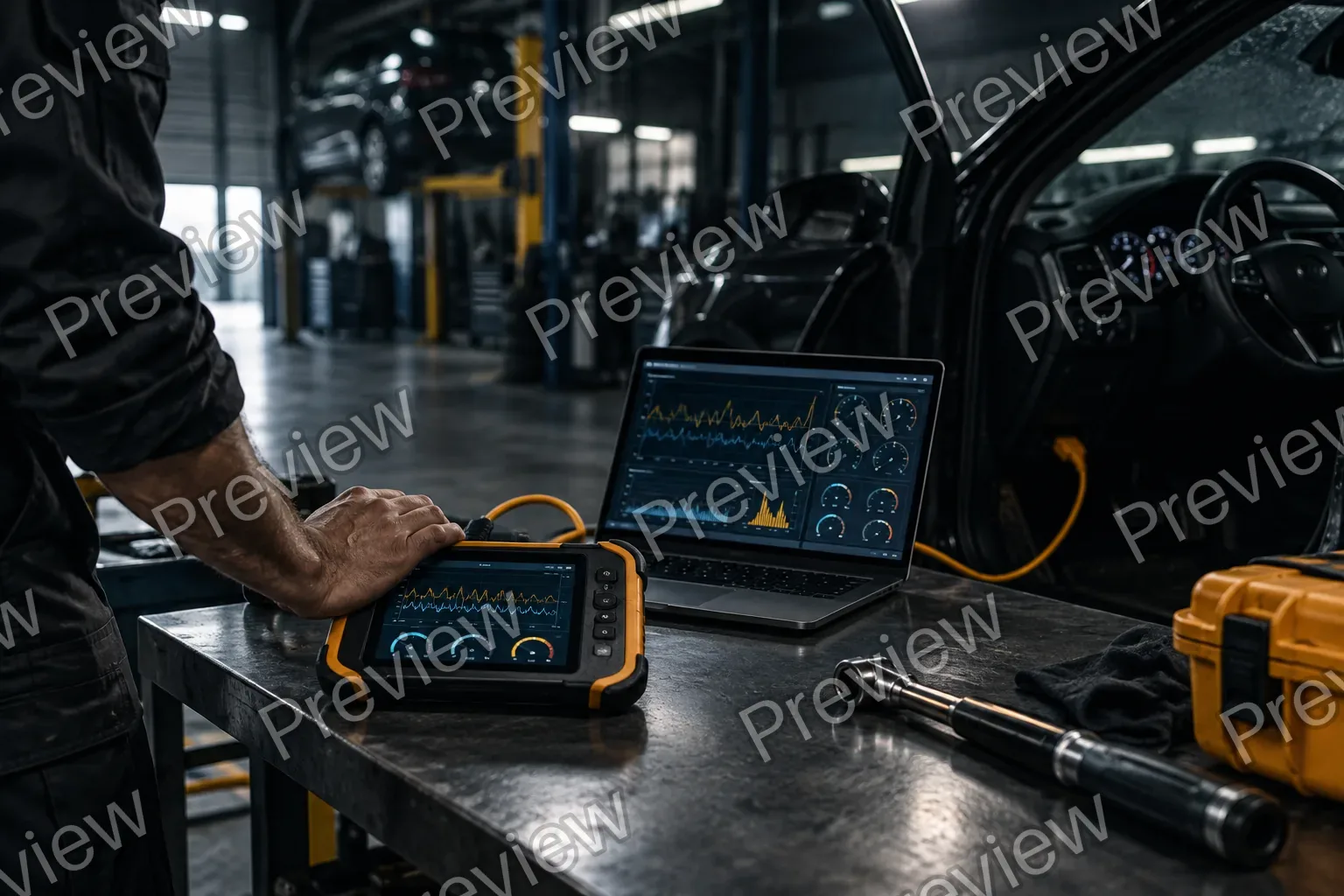
A warning light means the car has noticed a value outside the range the manufacturer allows. That is all. It does not say which part has failed, and it certainly does not say which part needs buying. The light is the symptom; the fault code behind it is a clue.
When you arrive, we plug in and read the stored codes, then clear nothing until we have written them down. A code that mentions an oxygen sensor, for example, is just as likely to be a leaking exhaust joint, a split hose or a tired connector as the sensor itself. Replacing the named part is the expensive way to guess.
What we do in the first hour
- Read every stored and pending code, in all control units, not just the engine
- Watch live data while the engine is cold, warm and under load
- Check the basics first: wiring, earths, air leaks, fluid levels, battery health
- Test the suspect circuit with a meter or scope before anything is ordered
That first hour is priced at €45, and we take it off the repair bill if you have the work done with us the same week. Most faults are named and costed inside it.
Which lights can wait, and which cannot
A steady orange light usually means drive gently and book in soon. A flashing orange engine light means stop driving: unburnt fuel is going into the exhaust and the catalytic converter can be destroyed in a few kilometres. Red lights for oil pressure or coolant temperature mean pull over as soon as it is safe and call us before restarting.
The worst outcome we see is a light that was cleared at the roadside and ignored for six months. The original repair was often small. The one that follows rarely is.