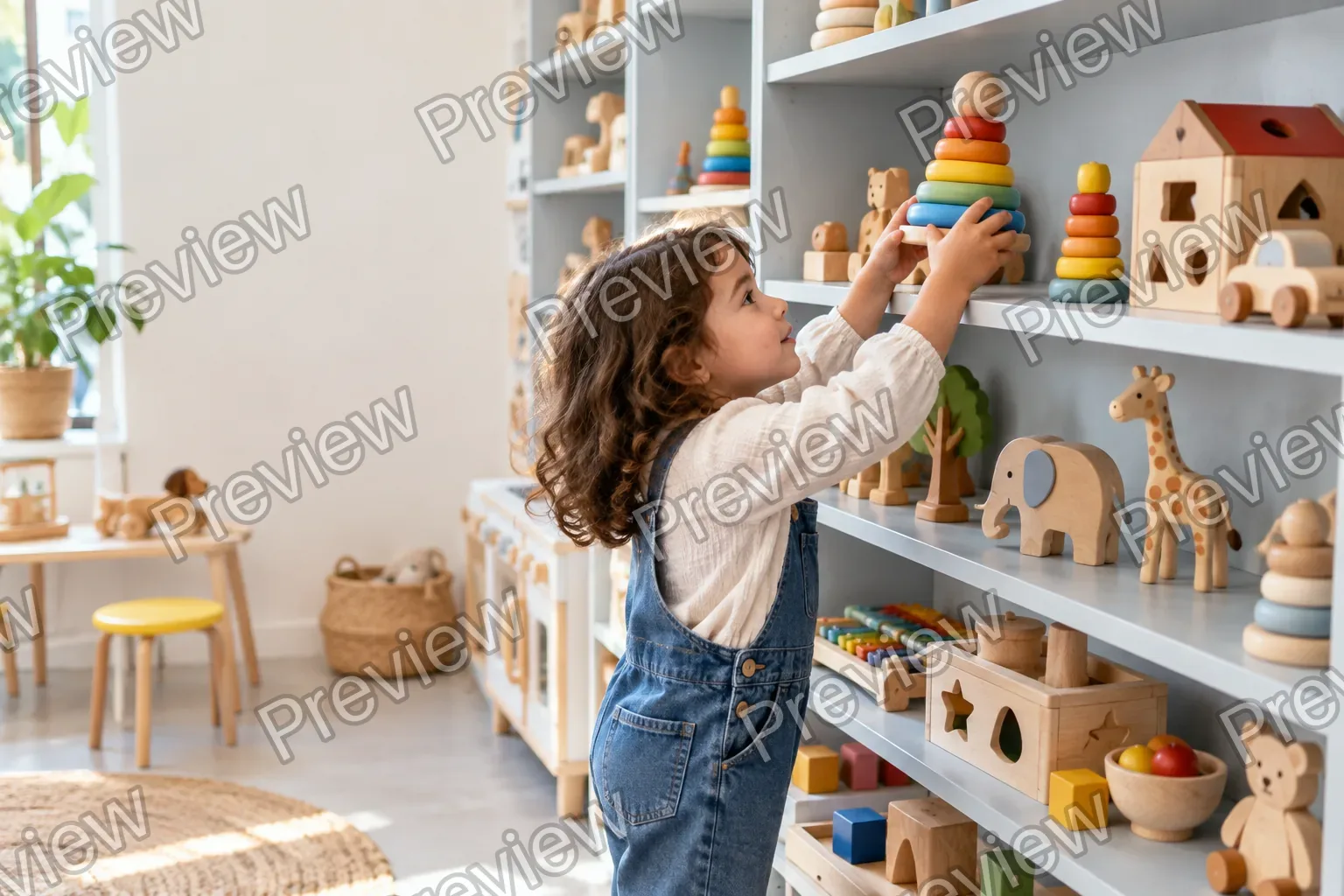
Somewhere around the third birthday, play stops being about cause and effect and starts being about stories. The blocks become a hospital, the wooden carrot gets cooked eleven times, and a plastic horse acquires a name and strong opinions. This is the single most useful thing to know when you are choosing a present.
Buy things that can become something else
Open-ended toys win at this age because the child supplies the plot. A set of wooden blocks, a handful of animal figures, a play kitchen, a basket of fabric scraps: none of them do anything on their own, which is exactly the point.
- Wooden blocks in one shape, in quantity, rather than a clever set with few pieces
- Animal or people figures that stand up by themselves
- A play kitchen with real weight to the doors and drawers
- First puzzles of 12 to 24 pieces, with a picture worth looking at
- Washable paints, chunky brushes and more paper than you think
What tends to disappoint
Toys with one button and one song. Anything that performs for the child instead of waiting for them. Big licensed playsets that only work in one story, which is usually a story somebody else wrote. And craft kits with fiddly stickers, which at three are a job for the grown-up.
A note on quantity
Fewer, better toys get played with more. If a present is going into a house that already has plenty, consider a refill: more blocks for the set they own, new paper for the easel, a second pack of figures. It is cheaper, it is kinder to the shelves, and it almost always gets used.
If you are stuck, tell us the age and one thing the child likes at the moment. Three options will be on the counter before you have taken your coat off.