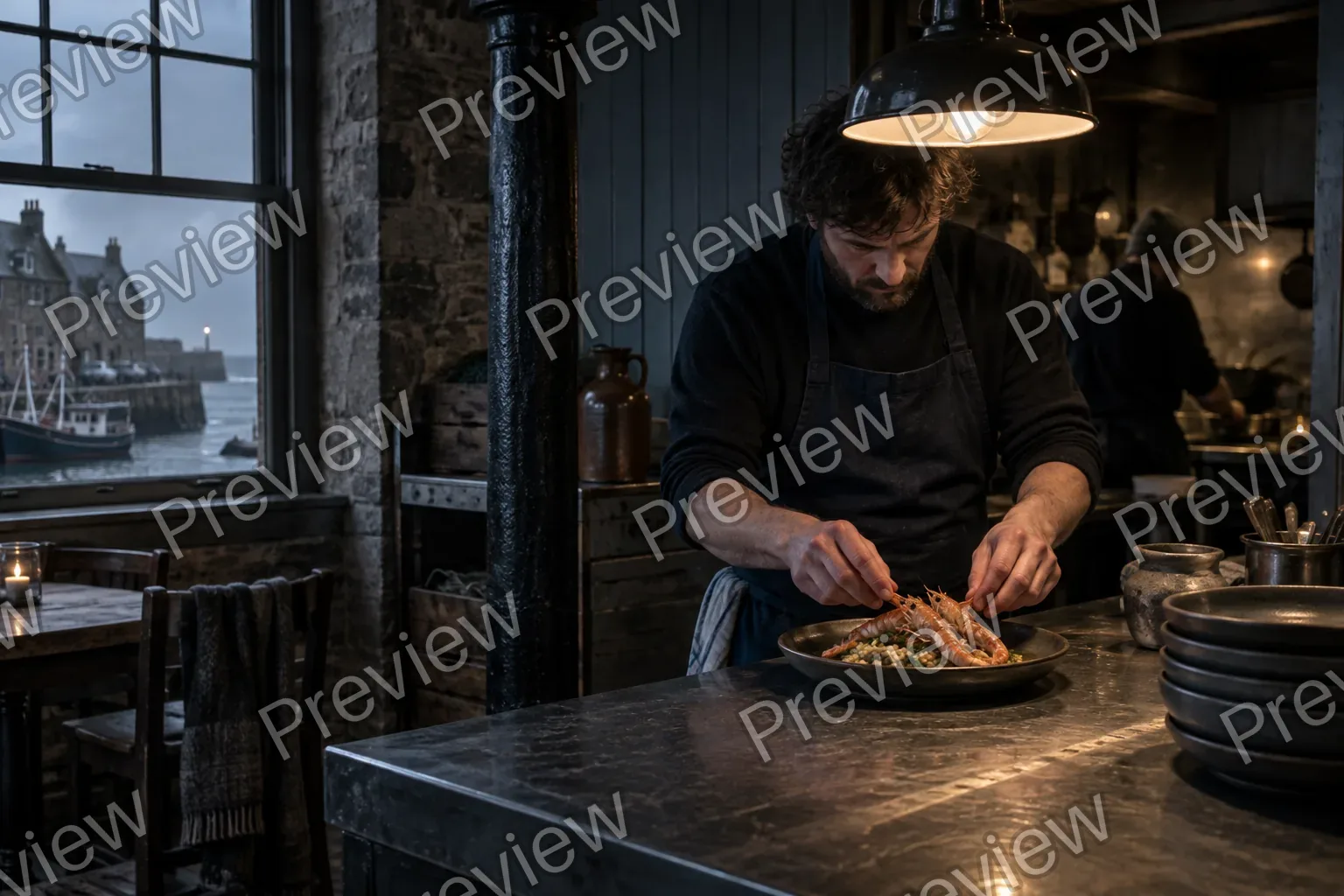
Most food photography fails for the same reason: it does not look like the restaurant. A dish shot on a white sweep under a ring light could have come from anywhere, and a guest who arrives expecting that and finds a dim room with one candle feels quietly misled.
So we shoot where the food is eaten. That means working at the pass with the service running, or at a table by the window before the doors open, with the room’s own light and whatever cloth and cutlery are already in use.
Four things that matter more than styling
- One light source, from the side or behind, so sauces and glazes have an edge
- A plate photographed within two minutes of leaving the kitchen, before anything collapses
- Hands in the frame — a thumb on a rim gives scale and tells you the picture is real
- Room pictures shot at the hour the restaurant is actually full
The practical part of a shoot like this is agreeing beforehand what cannot be interrupted. A head chef will give you almost anything if you promise not to hold a ticket, and that promise is easy to keep with a 35mm lens and no tripod.
For licensing we keep it simple: two years across your own site, menus, social channels and press. Most restaurants change their menu before they change their pictures, and when they do, we come back for a morning rather than start again.