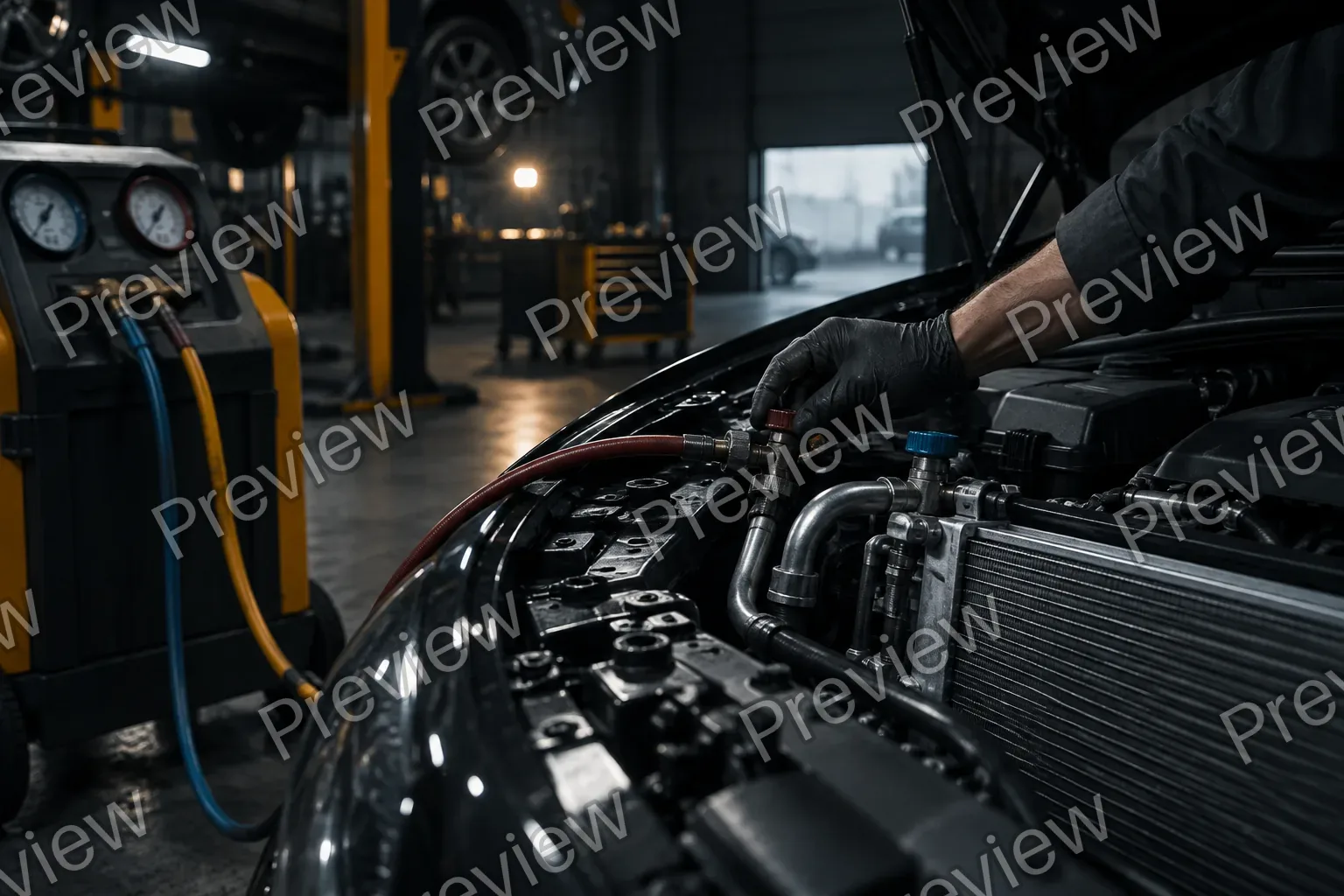
Air conditioning is a sealed system that loses a small amount of refrigerant every year through its seals and hoses — that is normal, and it is why a regas exists. What is not normal is a system that cooled fine last summer and blows warm in spring. That has a leak.
This is the one job where simply filling the system is poor value. Gas put into a leaking circuit is gone by the next season, and running the compressor with low refrigerant starves it of the oil carried in the gas. A seized compressor is a four-figure repair. A seal or a condenser is not.
How we find the leak
We put the system under vacuum and watch whether it holds. If it does not, we add a trace dye with the refrigerant and look along the pipes, the condenser in front of the radiator and the compressor shaft with an ultraviolet lamp. The condenser is the usual culprit, because it sits where the stones are.
A leak test and regas is €79. If the system will not hold vacuum we stop there and quote the repair rather than charge you for gas that is leaving.
The smell is a different problem
Damp, sour air when you first switch on is bacteria on the evaporator and a cabin filter that has been in place too long. We replace the filter, treat the evaporator housing and clear the drain, which takes under an hour and is included in a full service check.
Two habits keep the whole system healthy: run the air conditioning for ten minutes every couple of weeks, even in winter, to circulate the oil through the seals, and switch to fresh air for the last minute of a journey so the evaporator dries out.