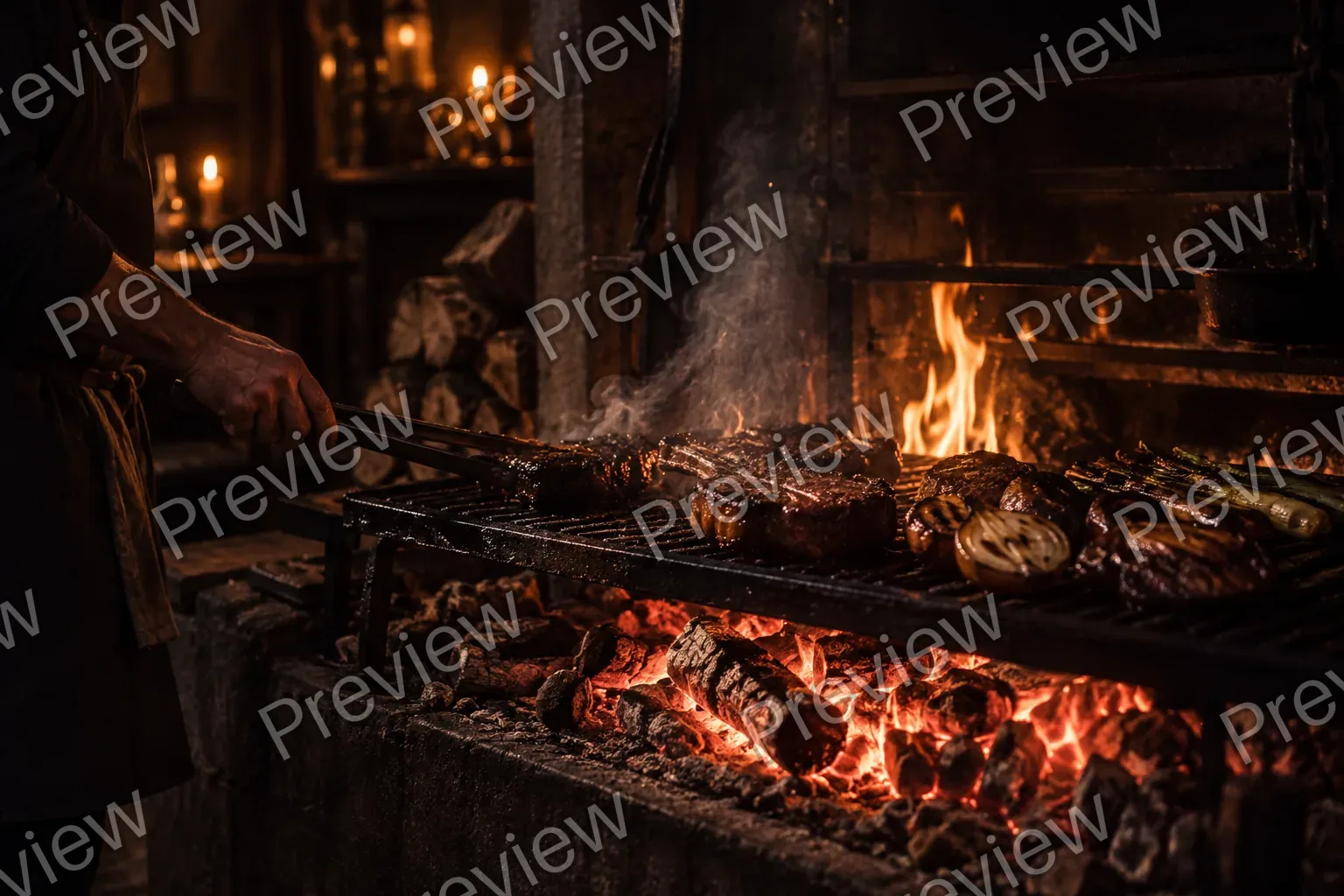
The fire is lit at three in the afternoon, four hours before the first guest sits down. By service it has stopped being flames and become a bed of embers, and that is the point: we cook on heat with a smell, not on fire.
Two woods go in. Oak for the body of the fire, split and stacked a year ahead so it burns slow and clean. Vine wood for the last twenty minutes before a dish goes on, because old prunings burn fast and give a sweet, almost resinous smoke that suits fish and anything with butter.
What the wood does
Smoke is an ingredient, and like every ingredient it can be used badly. Too much and everything tastes the same; too little and the fire might as well be a gas burner. The kitchen works to a simple rule: you should be able to name the vegetable before you name the smoke.
- Oak: steady heat for beef, lamb and anything that needs an hour
- Vine: short, perfumed smoke for turbot, oysters and butter sauces
- Ash: the coolest part of the hearth, where onions and leeks are buried whole
- Nothing treated, painted or resinous ever goes in
Cooking without a dial
There is no gas in the kitchen, so there is no number to turn to. Heat is managed by moving things: closer to the embers, further away, up onto the rack, into the ash. Cooks here learn to read the fire with the back of a hand before they learn a single recipe.
It is slower than a stove and less forgiving. A fire that has been allowed to drop cannot be brought back in five minutes, and a turbot left one minute too long is a turbot we eat ourselves. But the trade is worth it: food cooked this way tastes of where the heat came from, and no stove can copy that.
If you want to see it, book the chef’s table. Eight stools at the pass, the hearth two metres away, and a cook who will explain exactly why the leeks went into the ash at half past five.