Toys by age
Six age bands, with the kind of play each one is ready for and the toys that match.
Pick an age
What suits them right now
Ages are a guide, not a rule. Children race ahead in one thing and take their time with another, so treat these as a starting point and ask us the rest.

0–1 year
Rattles, soft books, wooden teethers and first instruments. Things that make a sound, survive a mouth and wash at forty degrees.

1–3 years
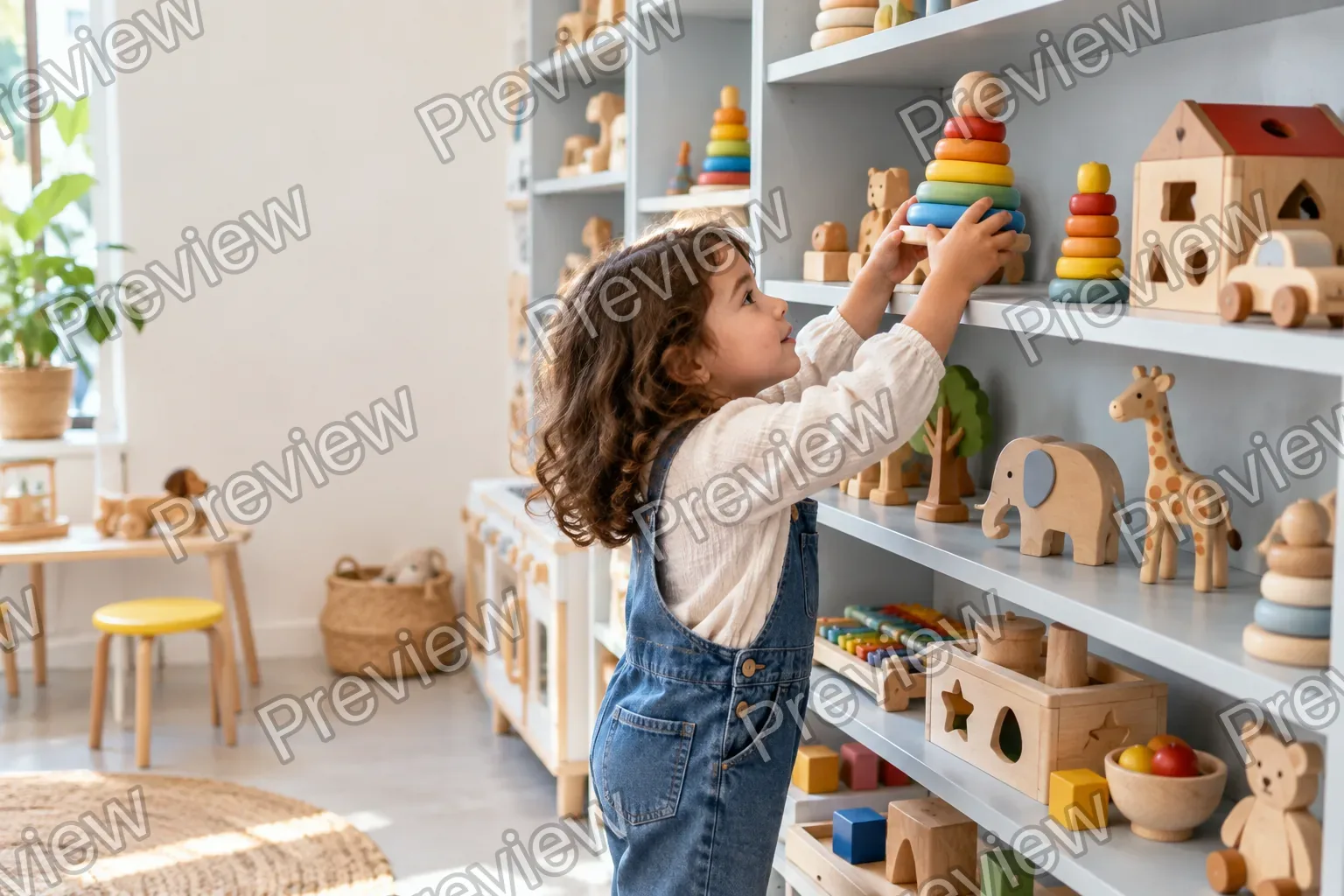
Stackers, shape sorters, pull-along animals and chunky first puzzles. Big pieces, few rules and a lot of repetition.

3–5 years
Play kitchens, animal figures, large-scale blocks, first card games and washable paints. The age when stories start running the play.

5–7 years
Marble runs, floor puzzles, family board games, skipping ropes and simple craft kits they can finish in one sitting.

7–10 years
Construction sets, strategy games, science and magic kits, kites and 500-piece puzzles. Patience arrives, and so do the rules.

10–12 years
Longer board games, model building, weaving and clay, 1000-piece puzzles and outdoor kit that takes a knock.
Safe bets
One present per age band
If you only want one answer, here it is: the toy we hand over most often for each age, with the price on the label.
Wooden teether and rattle duo
€9
Ages 0–1. Our most-given new-baby present, tested for small mouths.
Chunky shape sorter
€22
Ages 1–3. Six big beech shapes and a lid that comes off when patience runs out.
Animal figure family, 8 pieces
€26
Ages 3–5. Stands up by itself, fits in a pocket, acquires names within a day.
Marble run starter set
€42
Ages 5–7. Wooden rails and chutes that take two minutes to build and an afternoon to perfect.
Strategy game, ages 8+
€29
Ages 7–10. Forty minutes a round, simple rules, and a real decision on every turn.
Puzzle, 1000 pieces
€18
Ages 10–12. Thick card, a picture worth a week, and a tray to slide it under the sofa.
Not sure
Tell us the age, we do the rest
Most people arrive knowing one thing: the child is turning six. That is plenty. Give us an age, a budget and one interest, and we will put three real options on the counter and explain the difference between them.
- Age label on every shelf edge
- Three options, never twenty
- Open samples to try before buying
- Free wrapping while you wait
Age questions
What parents ask about ages
Short answers to the things that come up at the counter most weeks.
The box says 3+ but my child is two. Is that a safety rule?
Usually yes. The 3+ mark almost always means small parts, so we treat it strictly for anything that still goes in the mouth. Ask us and we will tell you whether it is a choking risk or simply a difficulty rating.
My child is ahead of their age. Should I buy older?
For puzzles and construction, yes, go a band up. For board games, stay close to the age, because the hard part is usually waiting a turn and losing gracefully rather than the rules.
What works for brothers and sisters of different ages?
Look for open-ended things: blocks, marble runs, animal figures, craft materials. We keep a shelf of games that work with mixed ages, with handicaps built into the rules.
How much should a good toy cost?
Most of our bestsellers sit between €15 and €45. Above that you are usually paying for size rather than quality, and we will say so.