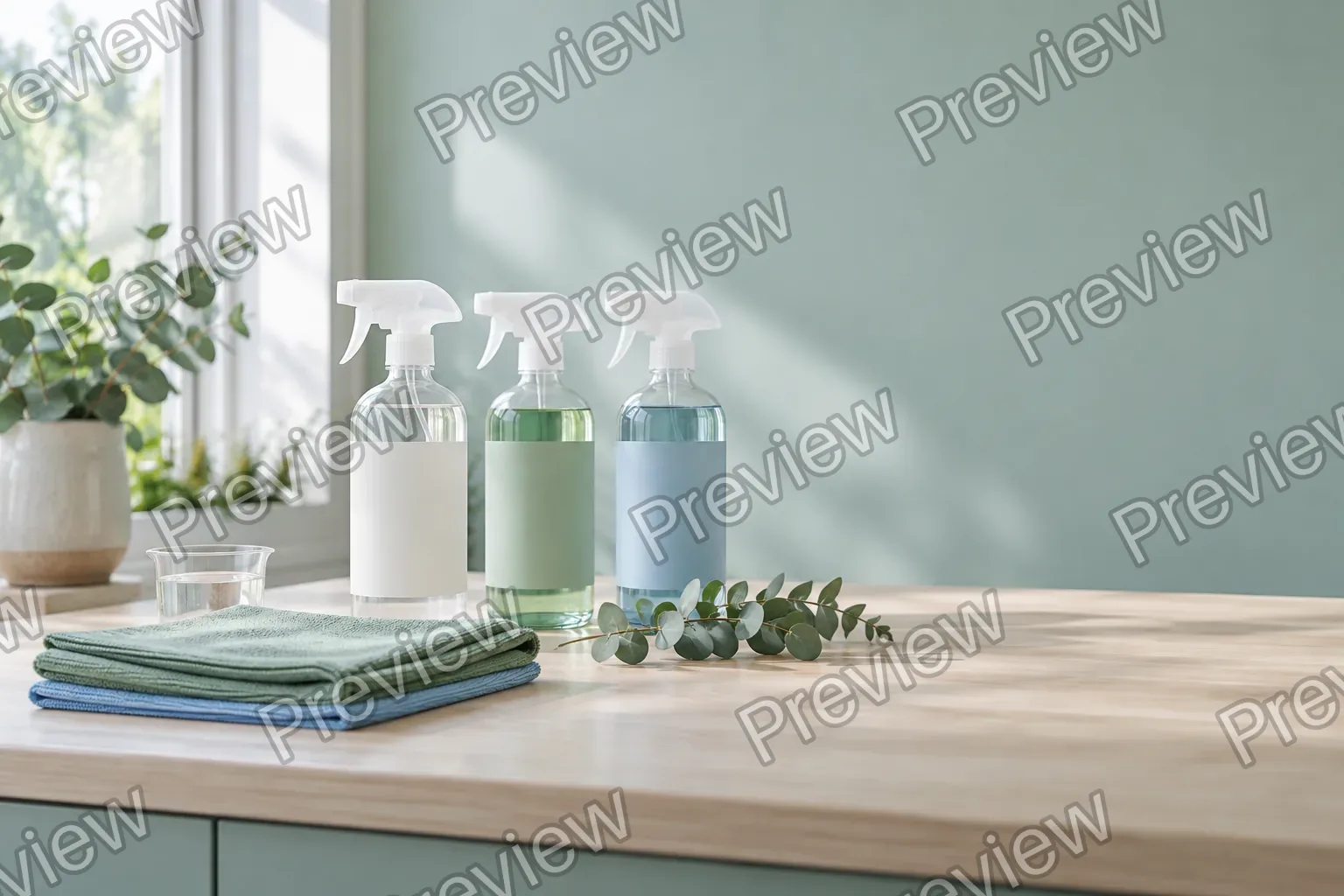
“Eco” on a bottle means very little on its own. When we changed our product shelf in 2017 we spent three months testing, because a gentler product that does not clean is no good to anyone — it just means two passes instead of one.
The things we check before buying
A product has to pass all of these before it reaches a trolley, not just the first one.
- An independent environmental certification, not a self-declared claim
- A full ingredient list, with fragrance and preservatives named
- Available as a concentrate, so we are not shipping water
- Safe on the surfaces we actually meet: sealed stone, vinyl, glass, stainless steel
- A dilution that still works at the stated rate, tested on real soiling
Concentrates and refillable bottles
Almost everything we use arrives as a concentrate and is diluted into labelled refillable bottles at our unit. The trolley carries five bottles instead of fifteen, our plastic waste dropped by roughly four-fifths, and dosing is consistent because the cleaner is not guessing from a squeeze.
Where disinfection is different
In clinics and treatment rooms the rules change. There we use approved disinfectants with documented contact times, colour-coded cloths per zone and a signed record left in each room. Gentler is not the goal in those rooms — traceability is. Everywhere else in the same building, the eco range does the work.
What you notice in the building
Less smell, mostly. People often expect a clean room to smell of chlorine or lemon, and a genuinely clean room smells of nothing at all. Staff with asthma notice it first, and so do parents in buildings with nurseries or waiting rooms.
If your organisation has an environmental policy to report against, ask us for the product list with certification numbers — we send it with every quote and update it whenever the shelf changes.