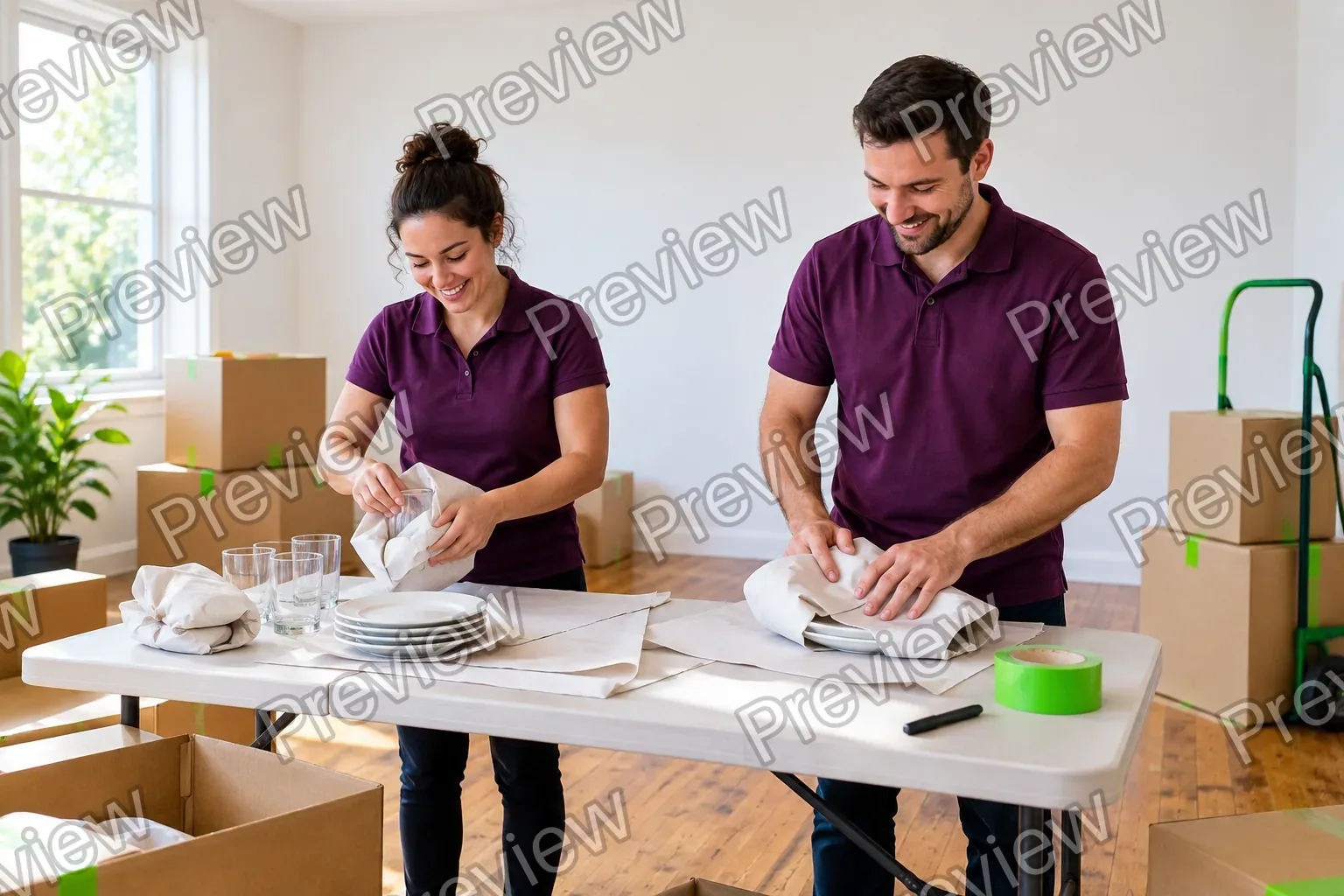
The kitchen is about a quarter of the packing time in an average home and almost all of the breakages. It is rarely bad luck: it is heavy items in big boxes, empty space inside boxes and nothing between the plates.
Start with paper, not bubble wrap
Plain packing paper beats bubble wrap for most crockery, because it fills gaps and takes the shape of whatever it wraps. Put several loose sheets in the bottom of the box, wrap each item on its own and crumple more paper into every space at the top. If a closed box rattles when you tilt it, it is not finished.
Plates stand up, glasses stand tall
Plates travel on their edges, like records in a crate, never stacked flat. A stack breaks at the bottom under its own weight on the first bump. Glasses and mugs stand upright in a single layer with paper between them, and cardboard dividers if you have them.
- Small boxes for crockery, pans and tins
- Large boxes only for plastics, baking trays and light appliances
- Knives wrapped in a tea towel, taped shut and marked as sharp
- Bottles and oils upright, in a box with a waterproof liner
Appliances need their own treatment
Empty and dry the kettle, coffee machine and blender. Tape loose lids and blades to the body, or bag them and tape the bag inside the box with the machine. Fridges and freezers must be defrosted and dry the night before, with the door left open, or the whole van smells by the afternoon.
Label as if someone else will unpack it
Write the room and one word about the contents on two sides of every box, and mark the fragile ones on the top as well. Our crews read those labels to decide what sits at the bottom of a stack and what rides on top.
Leave out one pan, one knife, two plates and the kettle until the last morning. Then let us carry the rest: a packed kitchen is heavy, and stairs are where enthusiasm ends.